


How to Photograph Your Beagle for a Custom Portrait
Beagles are adorable and notoriously squirmy. Here's how to get a portrait-ready photo that captures your dog's real personality.
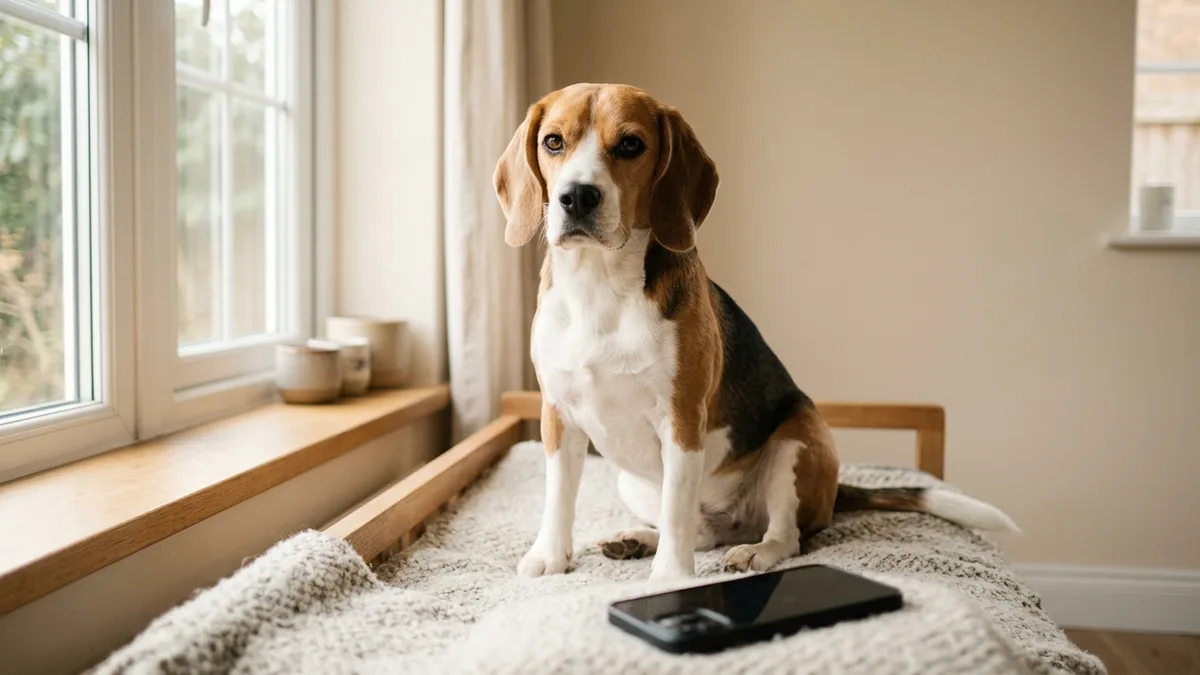
How to Photograph Your Beagle for a Custom Portrait
Beagles are many things: curious, cheerful, nose-forward, and constitutionally opposed to staying still. If you've ever tried to get a decent photo of yours, you know the drill. The second the camera comes out, they either bolt toward you for a face-check or spin around to investigate something more interesting in the other direction.
Getting a portrait-ready photo of a beagle isn't about luck. It's about understanding what makes them tick, then using that knowledge to your advantage. The result — a clear, well-lit, personality-packed photo — becomes the foundation for a portrait your dog actually deserves.
Why your source photo matters more than you think
The artists at MaginePaw paint each portrait through six rounds of refinement, with an automated likeness check built into the process. That system works best when the source photo is sharp and specific. A blurry snapshot can still produce something beautiful, but a crisp, well-framed photo gives the artist far more to work with — the exact shade where your beagle's tan saddle fades into white, the weight of those long ears, the brightness in their eyes when something interesting catches their attention.
Beagles have genuinely distinctive markings: the classic tricolor pattern, the white tail tip, the blaze running up the muzzle. The best portraits capture those details rather than approximate them. So a little planning before the shoot pays off more than people expect.
Light first, everything else second
Natural light is your best friend, and harsh midday sun is your enemy. Open shade is the sweet spot — a shaded spot outside that still receives plenty of ambient bounce. Under a tree on a sunny day, on a covered porch, or beside a building all work well. Your beagle's coat will look rich and even, their eyes will be bright without squinting, and you won't get harsh shadows cutting across their face.
If you're shooting indoors, position your dog near a large window and turn off the overhead lights, which flatten everything and add a yellow cast. Natural side light from the window gives your dog a little shape and warmth. Overcast days are genuinely ideal — the clouds act as a giant softbox and deliver flattering, even light from nearly any angle.
One thing to skip entirely: the built-in camera flash. It washes out coat detail and often causes eye glow, especially in dogs with light-colored eyes. Beagles frequently have hazel or amber eyes, and flash will blow right through them and lose the color entirely.
Background choices that help the portrait
Busy backgrounds pull focus away from your dog. A cluttered living room, a fence covered in shadows, or a pile of toys behind them all compete for attention — both in the photo and in the final portrait.
Clean, simple backgrounds work best. A plain wall in a neutral tone, a stretch of uniform grass, or a clear stretch of pavement are all solid options. You want anyone looking at the image to see your beagle first, last, and only.
Beagles have warm-toned coats, so backgrounds that complement rather than match give the fur somewhere to pop. Avoid pure white if your dog has significant white markings — they'll merge into the background. A soft gray wall, a medium-blue door, or green grass all provide contrast that helps the coat read clearly. If you want to see how different color combinations translate into finished work, browse maginepaw.com/breeds/dog/beagle for examples.
Getting your beagle to actually cooperate
This is the part that trips up even experienced dog photographers. Beagles are scent hounds. Their brain is wired to follow their nose, and asking them to sit still and look at a camera is essentially asking them to ignore the core purpose of their existence.
A few things that actually work: tire them out first. A 20-minute walk before your photo session does more for portrait quality than any tip about lighting or backgrounds. A beagle who has burned some energy will actually pause and look around instead of pulling in every direction.
Use sound instead of motion to get their attention. Beagles respond well to novel sounds — a squeaky toy held just above your phone, a short whistle, the crinkle of a treat bag. Make the sound, then shoot immediately when they snap their head toward it. You have about two seconds before they lose interest and go back to sniffing the ground.
Bring a helper if you can. One person keeps the beagle positioned and engaged; the other takes the photo. The helper can hold a treat just above the camera lens so your dog is looking almost directly at you without being distracted by the human behind the phone. This alone dramatically improves the success rate.
Take far more photos than you think you need. Forty shots might give you three or four genuinely good ones, and that's completely normal. You only need one to work with.
Framing and angles the artists love
Most people instinctively photograph their dogs from standing height — looking down at them. This angle works, but it rarely shows a dog at their best.
Get down to your beagle's level instead. Sit on the ground or crouch until the camera is roughly level with their eyes. The resulting photo feels like you're meeting them as equals, and it translates into a much more compelling portrait.
Frame the shot so your beagle's face fills at least half the image. Don't zoom in so close that you crop those ears — beagle ears are a defining part of the breed's character — but get close enough that the detail in their eyes and muzzle comes through clearly.
The best portrait photos tend to show a slight angle: your dog oriented mostly toward the camera but not locked in a fixed stare. A three-quarter turn — ears perked, nose slightly raised, eyes alert — reads as natural and engaged. Straight stares directly into the camera lens can look intense or stiff in the final portrait.
If you're planning a full-body portrait rather than a head-and-shoulders style, make sure paws and tail are in frame. Check before you wrap the session that you have at least a few shots showing the full dog.
What to do before you submit
Review the photo on a larger screen. Details that look sharp on a phone often show motion blur when viewed full size. The key indicator is the eyes — if they're sharp, the portrait will work. If they're slightly soft, try another shot from your session.
Don't filter or edit the photo before uploading. Portrait artists rely on accurate color to match your dog's coat, and filters shift those values in ways that are hard to correct. Send the original file.
Before you commit to anything, take advantage of the free watermarked preview. You'll see exactly how your photo looks translated into the portrait style you've chosen, with no payment required. That preview is worth testing with your best one or two candidate photos — it shows you immediately which image gives the artist the most to work with.
A good photo takes maybe ten minutes to set up and an hour to capture properly. The portrait it produces lasts for decades. For a dog as full of personality as a beagle, that math works out in their favor every time.