


Labrador Memorial Ideas: Gentle Ways to Remember Them
Losing a Lab leaves a particular quiet in a house. These gentle memorial ideas help you honor who they were and keep their memory close.
Labrador Memorial Ideas: Gentle Ways to Remember Them
Losing a Labrador is losing a shadow that was always underfoot, a nose that materialized whenever you opened the refrigerator, a tail that knocked things off coffee tables for eleven or fourteen years. They were big, warm, enthusiastic participants in every part of your life. When that presence disappears, the house goes quiet in a very specific way.
There is no single right way to grieve a dog, and there is no timeline you are supposed to follow. But some people find real comfort in doing something intentional — something that honors who their Lab actually was, rather than just marking that they are gone. These ideas tend to feel meaningful rather than performative.
A portrait that captures who they really were
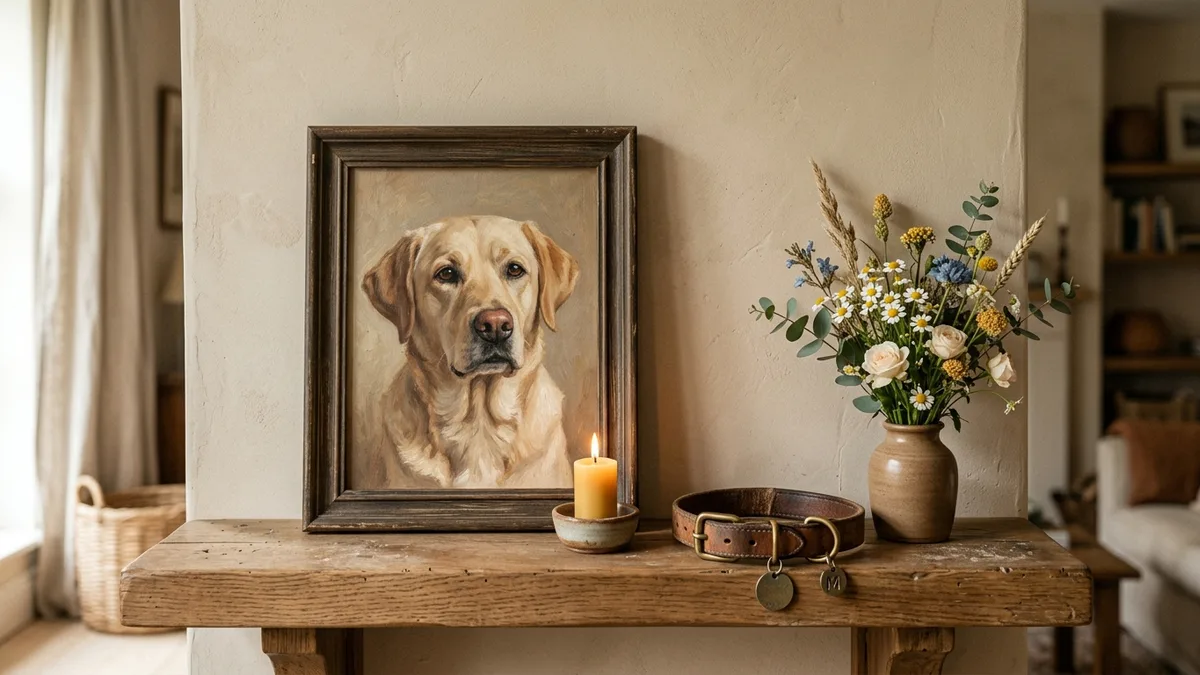
The hardest thing about losing a dog is that they exist now only in photographs and in memory. A painted portrait takes one of those photographs and turns it into something that can live on a wall, not buried somewhere in a camera roll.
At MaginePaw, you upload a few clear photos and choose from 12 signature styles — oil, watercolor, vintage illustration, and more. The portrait goes through six rounds of likeness refinement, so the result actually looks like your Lab, not a generic yellow dog with soulful eyes. Before you commit to anything, you get a free watermarked preview, which matters when you are making a decision like this in an emotional time.
If you had a yellow Lab who always looked mildly surprised, a chocolate one with a permanently regal expression, or a black Lab who disappeared entirely in low light except for the glint of their eyes, there is something at /styles that will suit them. Prints range from simple posters to gallery-wrapped canvas to fully framed pieces ($39–219). A portrait is the kind of thing that stops visitors mid-conversation and makes them ask "is that your dog?" — and then you get to talk about them, which is its own kind of comfort.
A garden space that gives you somewhere to go
Labs loved being outside. A dedicated corner of the garden gives you a physical place — somewhere to sit near them, even symbolically.
A flat stone engraved with their name and years works better than most people expect. Some companies include a small photo etched in ceramic that holds up to weather reasonably well. Plant around it with something that suits your climate: lavender is a hardy choice that smells good in the sun, and a small flowering shrub gives you something to look forward to each spring.
A tree is worth considering for a dog who lived a long life. A native species that grows well in your region without too much help will outlast most other memorials. Some families plant one on the first anniversary rather than immediately after the loss, which can make that difficult date feel like it holds something living rather than only something gone.
Donate in their name
Labradors are one of the most common breeds used as guide dogs, service dogs, and search-and-rescue dogs. If your Lab had the kind of easy, open temperament that made strangers feel immediately at ease, this connection might feel right.
A donation to a Labrador rescue organization, a guide dog training program, or a therapy animal group in your dog's name is quiet but meaningful. Some organizations will send a card acknowledging the tribute, which you can keep. Others let you dedicate a dog's training sponsorship to your Lab's memory. This is also something you can suggest to friends and family as an alternative to flowers, if you are holding any kind of gathering.
Make a keepsake from what you already have
You likely have more than you realize — photographs, fur from their brush, a collar tag, a favorite toy worn soft from years of carrying. These can become something tangible.
Paw print impression kits let you take an ink or clay print at home and are widely available. Several specialty services accept fur or a small clipping to create memorial jewelry: a pendant or ring with fur set in resin. It sounds unusual until you are holding it.
A photo book from a service like Artifact Uprising or Chatbooks takes an afternoon to put together and costs less than you might expect. Print the best 40 or 50 photographs, note the years they lived, and keep it somewhere accessible. Browsing a physical book feels different from scrolling through a phone — slower, more intentional, more like the dog deserved.
If you have any video — even short clips from a phone — gather them into one folder labeled with their name and years. You do not need to edit anything or add music. Just having them in one organized place means future you will not have to excavate old backups to find them.
Mark a day each year
Some people find that choosing a specific date — their birthday or the day they died — and doing something small on that day each year gives the grief somewhere to go. It does not have to be elaborate. Some people revisit a favorite walking trail. Some make a donation. Some just look through photos and let themselves feel whatever comes up without trying to manage it.
The point is not ceremony for its own sake. It is giving your Lab a day that belongs to them, so the anniversary does not pass quietly and leave you feeling off for reasons you cannot place until later in the evening.
Write down the things that will fade
One of the underrated parts of pet loss is that the world expects you to recover faster than you actually do, and people stop asking about your dog before you are ready to stop talking about them.
You do not have to wait to be asked. Write something down — even a single paragraph about what made your Lab different from every other Lab. What they were afraid of that they had no reason to fear. What they did every single time you came home from a trip. What their fur felt like behind their ears. What they smelled like on a rainy afternoon.
Put it somewhere permanent — a journal, a notes app you will still have in ten years, a printed page tucked into their photo book. Those details fade faster than anyone tells you they will. In twenty years you will be glad you wrote them down.
Labs have a way of taking up more space than their size explains. They are underfoot and in the middle of everything and loud in their enthusiasm for ordinary things. The grief that follows them tends to be proportional to all of that. Everything here is just a different way of saying: they mattered, they were here, and the fact that they are gone is not a small thing.