


How to Photograph a Maine Coon for a Custom Portrait
Maine Coons are all mane, ruff and tail — here's how to photograph yours so a custom portrait captures every bit of it.
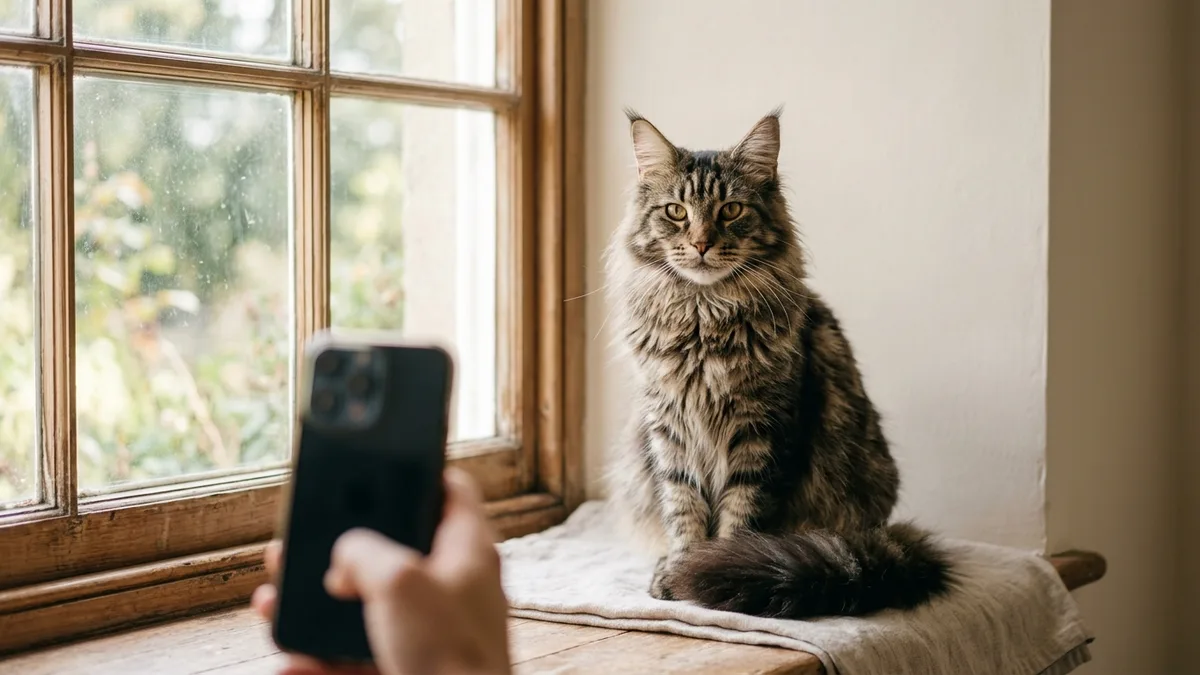
How to Photograph a Maine Coon for a Custom Portrait
How to Photograph a Maine Coon for a Custom Portrait
Maine Coons don't photograph like other cats. Most breed guides talk about getting a clean shot of the face and calling it done. That's not enough here. A Maine Coon's whole appeal is volume: the lion-sized mane around the neck and chest, the tufted lynx-tip ears, the tail that's practically a separate accessory. A photo that only captures the face is technically a photo of your cat, but it misses most of what makes a Maine Coon a Maine Coon.
Here's how to get a reference photo that gives a portrait artist the whole picture — mane included.
Light for depth, not just brightness
A Maine Coon's coat is long, shaggy, and famously water-resistant, which means it has real texture: individual guard hairs sitting over a dense undercoat, longer fur at the ruff and britches, shorter fur along the back. Flat, straight-on light — a phone flash, or a ceiling light directly overhead — flattens all of that into one solid-colored shape. You lose the exact thing you're trying to capture.
What works better is side light. Position your cat near a window during the day and let the light hit their coat at an angle rather than head-on. That angled light catches the layers of fur and throws small shadows between them, which is what makes a mane read as a mane instead of a fuzzy outline. This matters most for the brown tabby coloring common in the breed, where the banding in each hair only shows up when light rakes across it.
Overcast days and shaded outdoor spots work well too, for the same reason they work for any coat: even, diffused light shows detail without blowing out lighter patches or losing dark ones into shadow. Whatever colorway your Maine Coon is — brown tabby, black, red, or tortoiseshell — avoid direct midday sun, which tends to bleach out the lighter parts of the coat and swallow the darker ones.
Frame wide enough to fit the mane and tail
With most cats, a tight face shot is the safest bet. With a Maine Coon, cropping in too close can actually work against you, because it cuts off the ruff and the shoulders where a lot of the coat's character lives.
Aim to get the head, chest, and the top of the mane in frame, with the ears fully visible and not cut off at the top. If your cat is sitting or lying in a way that shows off the tail — draped over their paws, curled around their body — a wider shot that includes it gives the artist more to work with, even if the final portrait focuses mainly on the face and chest.
Get down to their eye level rather than shooting from standing height. Maine Coons have a broad, squarish muzzle and high cheekbones, and a top-down angle compresses that shape in a way that's hard for any artist to reconstruct accurately. Eye level keeps the proportions of the face true to life.
Getting a calm, direct look
Maine Coons tend to be easier to photograph than more high-strung breeds — the "gentle giant" reputation is earned — but a large, long-haired cat mid-stretch or mid-groom is still a moving target.
A feather wand or a piece of string held just above and behind the camera lens is usually the fastest way to get a Maine Coon to look straight at you with ears up and alert. A treat held still against the lens works too, and tends to produce that calm, attentive expression the breed is known for. Avoid anything that makes them crouch or flatten their ears — you want relaxed and curious, not startled.
Given their size, a Maine Coon settled on a windowsill or a favorite perch after a meal is often your best window. They're less likely to bolt mid-shot than a smaller, twitchier cat, which gives you time to take genuinely more photos than you think you need.
Three things that undercut an otherwise good photo
Matted or flattened fur reads badly in a portrait. If your Maine Coon has been lounging on a rough surface, a couple of minutes of gentle brushing beforehand — with an eye toward the neck ruff and the britches on the back legs — will make a real difference in how the coat translates.
Motion blur is common with this breed specifically because the tail and mane move even when the cat itself is sitting still. A slight breeze from a window or a fan can blur the outer edges of the coat in a photo that otherwise looks sharp. If you notice fuzzy edges around the fur, close the window or step away from the fan for the shot.
Busy or cluttered backgrounds compete with a coat this textured. A plain wall, a neutral blanket, or a windowsill without much behind it lets the mane and markings stay the visual focus instead of getting lost against a patterned rug or a bookshelf.
A few technical basics
Tap to focus on the eyes, not the nose or the front paws — most phone cameras default to whichever object is nearest the lens. Send three to five photos rather than searching for one perfect shot: a straight-on, a slight three-quarter angle, and at least one that shows the tail or the fullness of the coat from the side. And don't be afraid to include a photo taken from slightly below eye level if it's the one that best shows off the ruff — for this breed specifically, that extra bit of drama tends to serve the final portrait well.
Try the free preview before you commit
Once you've got a photo you're happy with, the free watermarked preview is the fastest way to check it actually has enough detail to work with. If the mane looks a little flat or the markings don't stand out in the preview, it's almost always a lighting issue in the source photo rather than anything wrong with the cat — try again near a window with the light coming from the side.
A Maine Coon's size and presence are exactly why owners commission portraits for them in the first place: this is a cat built for the grand treatment. On the breed page, three styles are highlighted as a particularly good fit — The Monarch, The Knight, and The General — chosen because a large, gentle-tempered cat with this much coat fills those scenes naturally. All twelve styles remain open to try, but if you're looking for a starting point, that's it.
Take a few extra minutes with the light and the brush before you shoot, and you'll have a reference photo that does justice to all that mane.
Keep reading How to Take the Perfect Photo for an AI Pet Portrait 7 Pet Portrait Mistakes to Avoid When Ordering How AI Pet Portraits Capture Your Pet's Exact Markings