


How to Photograph a Chihuahua for a Custom Portrait
Small dog, big personality, tricky photos. Here's how to get a chihuahua portrait photo that actually works.
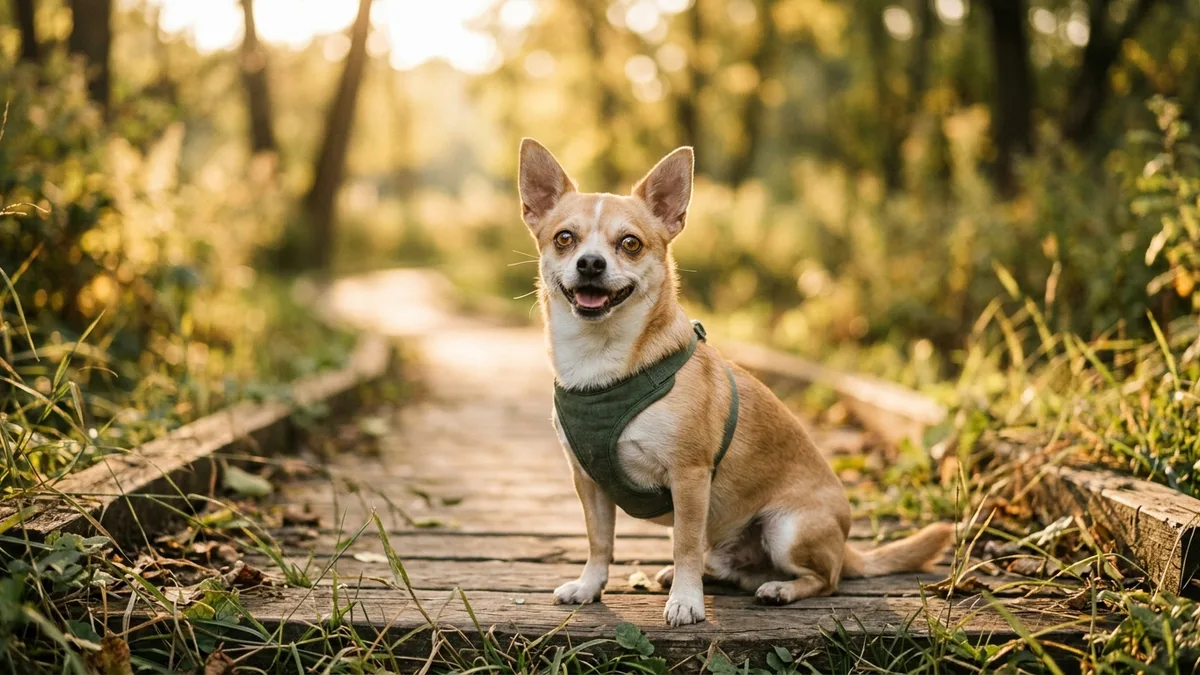
How to Photograph a Chihuahua for a Custom Portrait
Photographing a chihuahua sounds simple until you actually try it. These dogs are small, fast, and have faces packed with personality — big ears, enormous eyes, and an expression that swings from "regal emperor" to "absolute chaos goblin" in about three seconds. Getting a photo that captures who they actually are takes a little planning, but it's completely doable with your phone and some patience.
Here's what consistently works.
Get down to their level
The single biggest mistake people make is photographing a chihuahua from standing height. You end up with a photo that's mostly top-of-head, your dog looking up at you with a wide-eyed expression, and the background full of floor tiles or carpet. That's not a portrait. That's a security camera screenshot.
Sit on the floor. Lie on your stomach if the shot requires it. When your camera is at your chihuahua's eye level or just slightly below, you'll see their full face, their expression, and that wonderful alert posture they carry around like a tiny self-appointed dignitary. Eye-level shots are what our artists use to understand the real shape of your dog's face — the width between the eyes, the set of the ears, the length of the muzzle — and all of that information disappears when the camera is looking down.
If getting on the floor is difficult, position your dog on a couch arm or ottoman at a comfortable shooting height instead. The point is to be at their level, not above it.
Natural light makes everything easier
Chihuahuas have large, often very dark eyes, and those eyes need good light to photograph well. Flash is almost always a mistake. It creates flat, harsh light, blows out pale coats, and gives most dogs either red-eye or, in the case of chihuahuas, a slightly alien glow that no amount of editing fully fixes.
Look for a window with soft, indirect light. A north-facing window is ideal, or any window where direct sunlight isn't streaming straight in. Position your dog a foot or two from the window so the light falls across their face from the side, which brings out the shape of their features without washing them out. Even a spot on a bright but shaded porch works well.
Overcast days outside are genuinely excellent for this. When clouds cover the sun, they act like a giant diffused light source — the light is even and soft, with no harsh shadows under the chin or around the eyes. If you have overcast mornings where you live, take advantage of them.
Avoid photographing in the evening under warm indoor lighting. That yellow tone is hard to correct in editing, and it tends to shift coat colors. A fawn chihuahua photographed under incandescent lights can end up looking orange in a way that doesn't match their real coat. Since portrait artists match coat colors from your reference photo, accurate light matters more than you might expect.
The ears deserve their own attention
Chihuahuas come with two ear types — the large, upright bat ears most people picture, and the softer floppy or semi-erect ears found in some individuals. Both are distinctive and both should be fully visible in your portrait photo.
A common cropping mistake is getting so close to the face that the ears are cut off or touching the frame edges. For a good portrait reference, you want to see the whole head with a little breathing room on all sides. If your dog has the iconic upright ears, make sure both tips are fully in frame. If they have floppy ears, photograph them in their natural resting position rather than when they're pinned back in excitement or anxiety — resting ears show the dog's real character.
Angle-wise, a front-facing shot or a gentle three-quarter turn (slightly to one side) works best. Pure profile shots are elegant in person but harder to use as portrait references because they only show one side of the face and make it difficult to read the full structure of the head.
How to get them to actually hold still
This is where most people run into trouble. Chihuahuas are alert, curious dogs who often have strong opinions about sitting still on command, especially when there's a mysterious glowing rectangle being pointed at them.
A few things that actually work
Place them somewhere elevated. A chair, a couch arm, or the top of a step. Height makes most dogs pause and survey their surroundings before moving, and that moment of stillness is your window. Shoot in burst mode so you capture the best expression from several frames.
Bring a helper. One person holds a treat or squeaky toy just above and behind the camera lens. The dog orients toward the sound or the smell, looks directly at the camera, and holds eye contact for a second or two. This is consistently the most reliable way to get a direct-gaze portrait.
Photograph after exercise. A chihuahua who has just come back from a walk is far more cooperative than one who has been resting since morning. Post-walk, many will settle on a cushion and look around calmly for a few minutes — which is your opportunity.
Don't underestimate the lap. Many chihuahuas are calmer when held against someone familiar. Have a family member hold your dog on their lap while you take the photo. The background will be a lap, but portrait backgrounds are often simplified or replaced in the final art, so don't let that stop you.
What the photo needs to actually be usable
Sharp eyes are non-negotiable. If the eyes are in focus and the rest of the face is slightly soft from depth of field, that's fine. If the eyes are blurry, the photo can't be used as a portrait reference — eyes are where artists start when building a likeness, and they need crisp detail to work from.
Check for motion blur by zooming into the face after each burst. A slightly overexposed photo is usually more recoverable than a blurry one. Take more photos than you think you need and select afterward.
One clear, close shot of the face is worth ten photos where your dog is small in the frame. Our artists can build a beautiful portrait from a single well-composed reference. What's very difficult is reconstructing a face from a tiny blur in the corner of the image.
Distinctive markings should be clearly visible. If your chihuahua has a black mask, a white blaze, tan points, or any other patterning, those need to be readable in the photo. Markings are part of what makes your specific dog themselves, and the artist will include them.
Before you order
Once you have a few good candidates, upload your best shots when you start your order. We'll send you a free watermarked preview before anything goes to print, so you can see exactly how your photos translated into the portrait and request changes before committing. That step exists precisely for situations like this — it answers the question of which photo worked best.
If you're still deciding on a style, the /breeds/dog/chihuahua page has examples of completed portraits alongside notes on which of our 12 styles tend to suit the breed's features. Chihuahuas with their expressive, high-contrast faces often look particularly sharp in the more graphic styles, but that's a matter of personal taste.
The practical version: get on the floor, use window light, shoot in burst mode, make sure the eyes are sharp. Your chihuahua is already full of personality. A good photo just gets out of the way and lets you see it.