


British Shorthair Memorial Ideas: Gentle Ways to Remember Them
Losing a British Shorthair leaves a particular quiet. Here are gentle, lasting ways to honor the round-faced companion who shared your home.
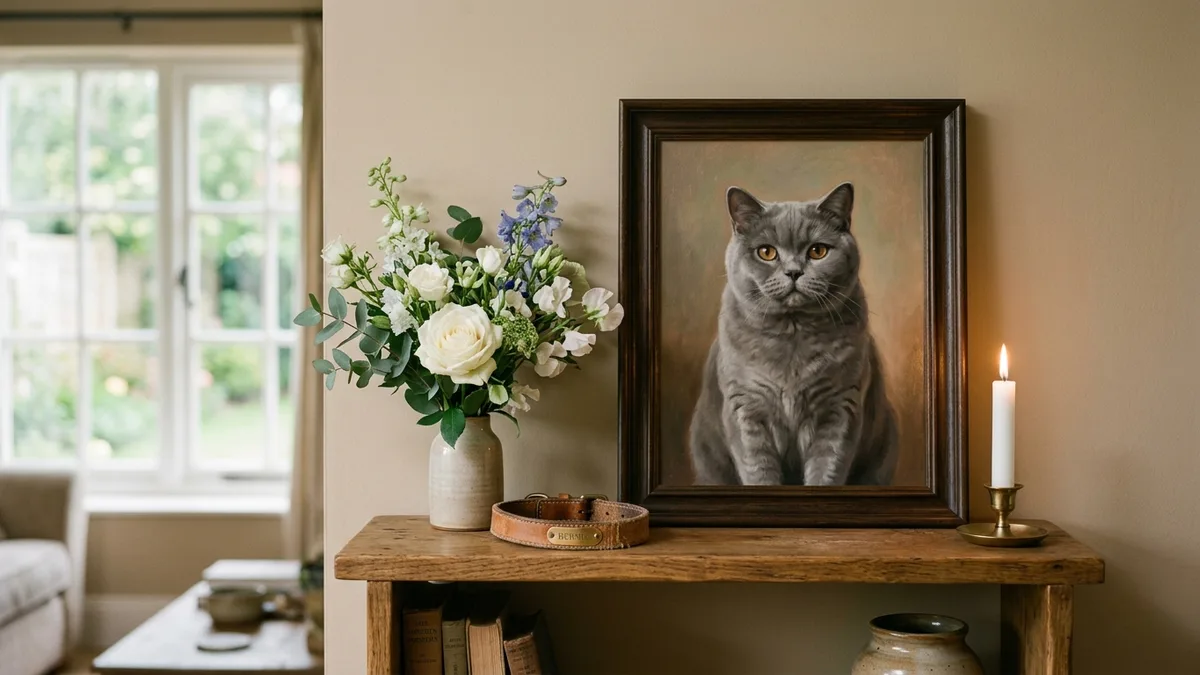
British Shorthair Memorial Ideas: Gentle Ways to Remember Them
There is a particular kind of quiet that follows losing a British Shorthair. They were never the loudest cats in the room — no dramatic leaps onto your keyboard, no 3 a.m. yowling at invisible things. They simply sat with you, steadily and solidly, in that way only a British Shorthair can. Somehow that stillness made them feel permanent. Until they weren't.
If you're looking for ways to honor yours, this is for you. These ideas range from the deeply personal to the small and practical, but they all come from the same place: the belief that a cat who shared your home for 12, 15, even 18 years deserves more than a corner of a shelf and a few sad days.
Why British Shorthairs leave such a specific kind of absence
The breed has been a companion animal for centuries, one of the oldest recognized cat breeds in the world. That history shows in their temperament. British Shorthairs are calm, observant, and deeply attached in their understated way. They don't ask for much. They sit nearby. They blink slowly at you. They have opinions but express them quietly, with a look that communicates exactly what they think of your choices.
That restraint can make grief complicated. You might be surprised by how much empty space one plush, copper-eyed cat could fill: the chair they claimed, the spot on the windowsill, the weight on your feet at night. Before you do anything else, the most useful thing you can do is acknowledge that this loss is real and that it matters. It does.
Start with the right photographs
Most of us take pictures of our cats constantly, but usually in motion, in low light, or at angles that don't quite capture what made them them. Before you plan any memorial, go through your camera roll and pull out 10 to 15 photos where your cat actually looks like your cat. The one where the light caught the amber in their eyes. The one where their face was perfectly, roundly British Shorthair, that dense broad head the breed is known for.
Save these separately. They become the foundation for almost everything else: a portrait commission, a photo book, a framed print you actually want to hang. Good source photos mean any tribute you create will genuinely look like your cat, not just any grey-and-white cat. The difference between a portrait that captures someone and one that merely resembles them usually comes down to the quality of the reference photo.
If you're not ready to look through photos yet, that is entirely fine. There is no correct timeline for grief, and the right moment to go through those pictures will make itself known.
Commission a portrait that captures who they actually were
A custom pet portrait is one of the most enduring ways to keep a cat's likeness in your home. The meaningful difference between a stylized illustration and a genuine portrait is whether someone has actually studied your cat's face. The specific way their eyes were set, the density of their coat, the exact color of their nose leather, the particular expression they had when watching something from across the room.
At MaginePaw, every portrait goes through six takes with an automated likeness review before it's finalized. That process is designed to catch the small things: the set of the ears, the roundness of the head, the weight in the face that makes a British Shorthair look like a British Shorthair rather than just any stocky grey cat. You can browse all portrait styles at /styles, from oil-painting classics to soft watercolor treatments that suit the breed's gentle, dignified personality particularly well.
If you're not certain which style fits best, you can order a free watermarked preview before committing to a print. It lets you see your cat's face in the chosen style and confirm the likeness is right before you spend anything on canvas or framing.
Create a memory corner rather than a memorial shelf
There is a meaningful difference between a shrine and a living space. A memorial shelf can feel heavy, untouchable, a little sad every time you walk past it. A memory corner is something you actually use and enjoy.
Pick one small area of your home: a windowsill, a section of bookshelf, a side table. Include a framed photo or portrait, something your cat actually used (a favorite toy, their collar, the blanket they claimed), and maybe a plant. British Shorthairs were drawn to sunny spots, so a window with afternoon light and a small framed portrait can feel like a continuation of their presence rather than a marker of absence.
Some people keep their cat's ashes in a simple ceramic urn that fits naturally into the room's aesthetic. Something that looks like it genuinely belongs on the shelf, not like a funeral object. That distinction matters more than it might seem. You want to walk past it and feel something warm.
Write things down before the details start to fade
British Shorthair owners tend to be observers. The specific sound your cat made when they wanted dinner, which was different from the sound when they wanted attention. The exact spot on the sofa. The Sunday habit of sitting in the same patch of light. These details disappear first when grief starts to blur the edges.
Writing them down, even in a private note on your phone, even as a loose list of bullet points, does two things. It preserves the specific texture of your relationship with that particular cat, and it puts memory somewhere outside your head, which can feel like a specific kind of relief. You don't need to write an essay. A list of habits, preferences, and quirks is enough. Some people find it helps to write a letter directly to the cat. There is nothing strange about that.
This is also a good time to let the people who loved your cat know. Telling your vet's office, even just a brief email, means the chart is closed with care, and many vet offices will send a handwritten card. The neighbor who looked after your cat when you traveled, the friend who always asked how they were doing: giving those people a chance to acknowledge the loss matters to them too.
If you want to mark an anniversary, British Shorthair rescues across the US accept donations in a cat's name. They're usually small, genuinely underfunded, and a donation in memory means something real. Some owners order a portrait print at the one-year mark, once they've had time to choose the right photo and sit with the decision. Planning something intentional for significant dates can make them feel purposeful rather than just painful.
On letting yourself grieve
People who haven't loved a cat sometimes underestimate what it is to lose one. British Shorthair owners especially, because the breed is so dignified and self-contained, sometimes find that others minimize what was a daily, years-long relationship. It wasn't a small thing. The quiet in the house is real.
However you choose to honor your cat, a portrait, a written record of their habits, a donation to rescue, or simply keeping their blanket on the sofa a little longer, the point is the same. You are acknowledging something that mattered. That is always enough.